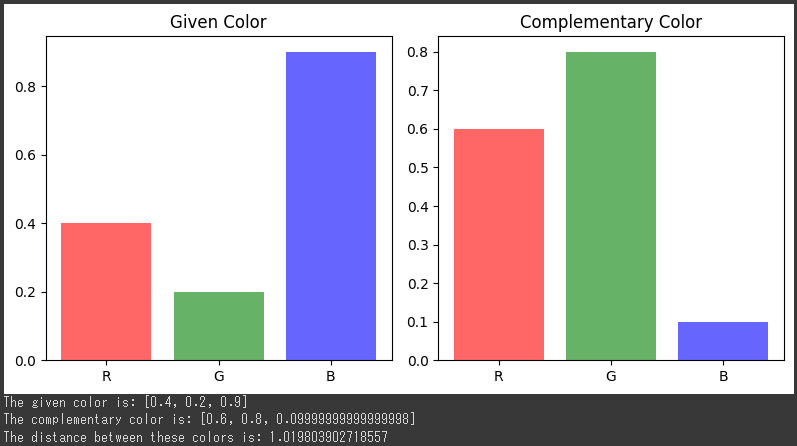
plt.figure(figsize=(8, 4)) for i inrange(2): plt.subplot(1, 2, i+1) plt.bar(range(len(colors[i])), colors[i], color=['r', 'g', 'b'], alpha=0.6) plt.xticks(range(len(colors[i])), ['R', 'G', 'B']) plt.title(labels[i])
plt.tight_layout() plt.show()
print(f"The given color is: {given_color}") print(f"The complementary color is: {complementary_color}") print(f"The distance between these colors is: {distance_value}")
print(f"The given color is: {given_color}") print(f"The complementary color is: {complementary_color}") print(f"The distance between these colors is: {distance_value}")
The given color is: [0.4, 0.2, 0.9]
The complementary color is: [0.6, 0.8, 0.09999999999999998]
The distance between these colors is: 1.019803902718557
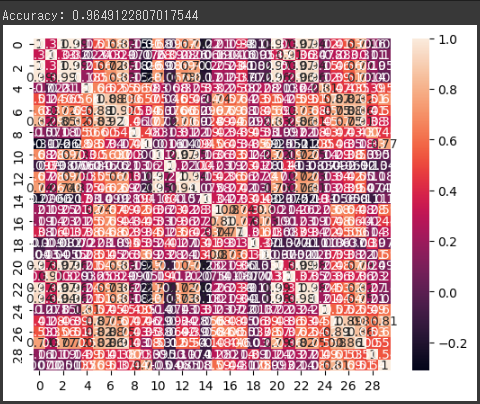
from sklearn import datasets from sklearn.model_selection import train_test_split from sklearn.ensemble import RandomForestClassifier from sklearn.metrics import accuracy_score import matplotlib.pyplot as plt import seaborn as sns
次に、心臓疾患のデータセットをロードします。
scikit-learnのdatasetsモジュールには、心臓疾患のデータセットが含まれています。
1
2
3
heart = datasets.load_breast_cancer()
X = heart.data
y = heart.target
次に、データセットを訓練データとテストデータに分割します。
1
X_train, X_test, y_train, y_test = train_test_split(X, y, test_size=0.2, random_state=42)
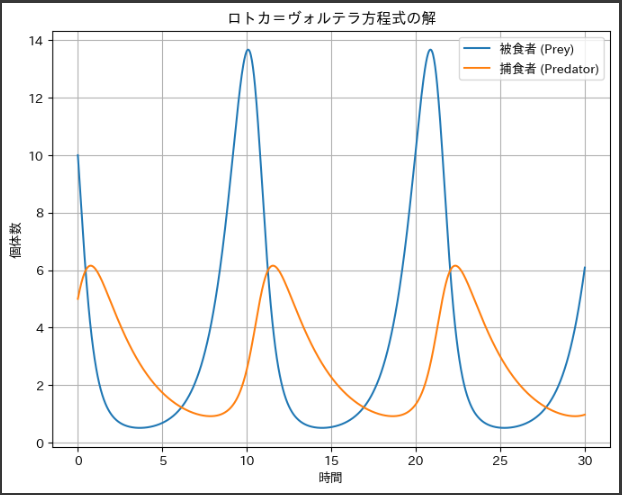
defpredator_prey_equations(xy, t, alpha, beta, delta, gamma): x, y = xy dxdt = alpha * x - beta * x * y dydt = delta * x * y - gamma * y return [dxdt, dydt]
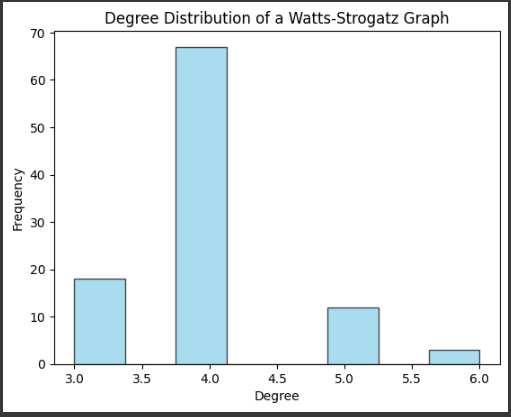
plt.hist(degrees, bins='auto', alpha=0.7, color='skyblue', edgecolor='black')
plt.xlabel('Degree')
plt.ylabel('Frequency')
plt.title('Degree Distribution of a Watts-Strogatz Graph')
plt.show()
# 変数を作成 x = [] for i in families: x.append(solver.IntVar(0, 1, 'x[%i]' % i)) # x[i] = 家族iに食糧を配達するかどうか (0 または 1)
# 制約を定義 budget = 30# 予算 solver.Add(sum(transport_costs[i] * x[i] for i in families) <= budget)
# 目的関数を定義 solver.Maximize(scalar_multiplier * sum(food_required[i] * x[i] for i in families) - sum(transport_costs[i] * x[i] for i in families))
# 問題を解く solver.Solve()
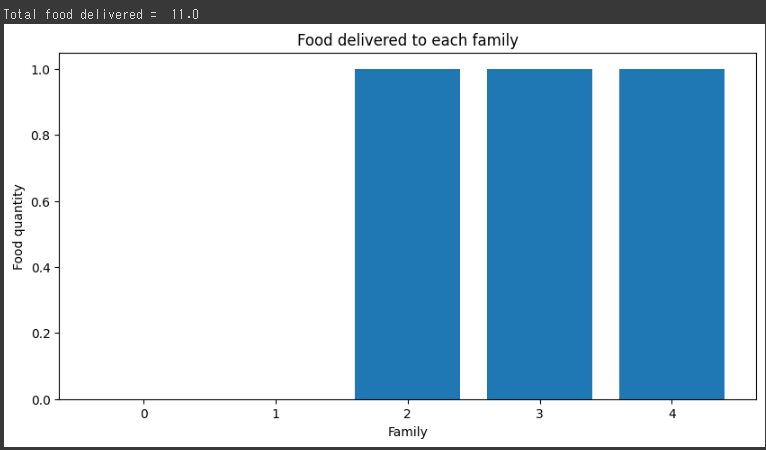
# 結果を出力 print("Total food delivered = ", sum(food_required[i] * x[i].solution_value() for i in families)) delivered = [x[i].solution_value() for i in families] plt.figure(figsize=(10,5)) plt.bar(range(len(families)), delivered) plt.title("Food delivered to each family") plt.xlabel("Family") plt.ylabel("Food quantity") plt.xticks(range(len(families)), families) plt.show()
print("Total food delivered = ", sum(food_required[i] * x[i].solution_value() for i in families))
delivered = [x[i].solution_value() for i in families]
plt.figure(figsize=(10,5))
plt.bar(range(len(families)), delivered)
plt.title("Food delivered to each family")
plt.xlabel("Family")
plt.ylabel("Food quantity")
plt.xticks(range(len(families)), families)
plt.show()