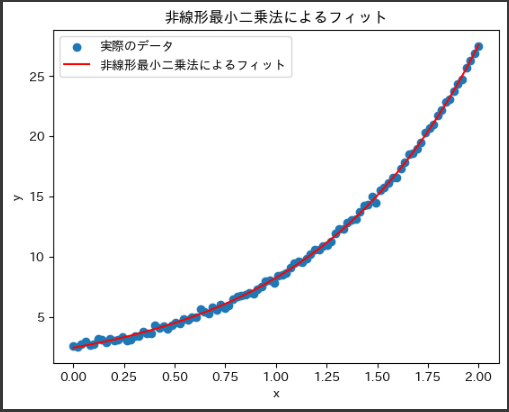
1
2
3
4
5
6
7
8
9
10
11
12
13
14
15
16
17
18
19
20
21
22
23
24
25
26
27
28
29
30
31
32
33
34
35
36
37
38
39
40
41
42
43
44
45
46
47
48
49
50
51
52
53
54
55
56
57
58
59
60
61
62
63
64
65
66
67
68
69
70
71
72
73
74
75
76
77
78
79
80
81
82
83
84
85
86
87
88
89
| from ortools.constraint_solver import routing_enums_pb2
from ortools.constraint_solver import pywrapcp
import matplotlib.pyplot as plt
import networkx as nx
locations = [(35, 10), (15, 15), (25, 25), (30, 40), (45, 35), (10, 20), (50, 25)]
depot = (0, 0)
def create_data_model():
    data = {}
    data['distance_matrix'] = [
        [0, 10, 15, 20, 25, 30, 35],
        [10, 0, 10, 15, 20, 25, 30],
        [15, 10, 0, 10, 15, 20, 25],
        [20, 15, 10, 0, 10, 15, 20],
        [25, 20, 15, 10, 0, 10, 15],
        [30, 25, 20, 15, 10, 0, 10],
        [35, 30, 25, 20, 15, 10, 0]
    ]
    data['num_vehicles'] = 1
    data['depot'] = 0
    return data
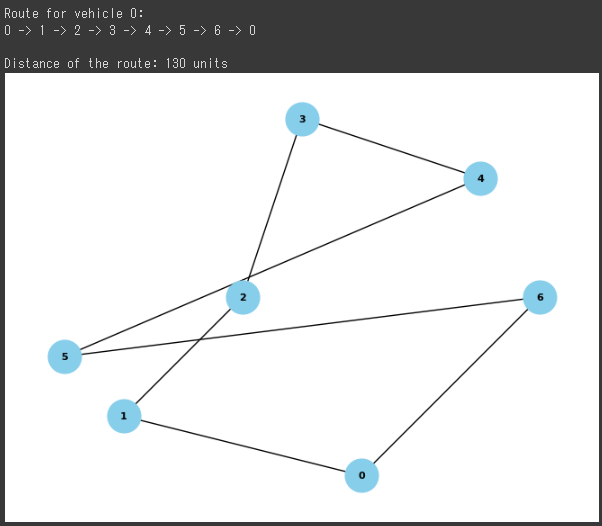
def plot_solution(manager, routing, solution):
index = routing.Start(0)
plan_output = 'Route for vehicle 0:\n'
route_distance = 0
while not routing.IsEnd(index):
plan_output += f'{manager.IndexToNode(index)} -> '
previous_index = index
index = solution.Value(routing.NextVar(index))
route_distance += routing.GetArcCostForVehicle(previous_index, index, 0)
plan_output += f'{manager.IndexToNode(index)}\n'
route_distance += routing.GetArcCostForVehicle(previous_index, index, 0)
print(plan_output)
print(f'Distance of the route: {route_distance} units')
G = nx.Graph()
for i in range(len(locations)):
G.add_node(i, pos=locations[i])
for i in range(manager.GetNumberOfVehicles()):
index = routing.Start(i)
while not routing.IsEnd(index):
next_index = solution.Value(routing.NextVar(index))
G.add_edge(manager.IndexToNode(index), manager.IndexToNode(next_index))
index = next_index
pos = nx.get_node_attributes(G, 'pos')
nx.draw(G, pos, with_labels=True, font_weight='bold', node_size=700, node_color='skyblue', font_size=8, font_color='black')
plt.show()
def main():
data = create_data_model()
manager = pywrapcp.RoutingIndexManager(len(data['distance_matrix']), data['num_vehicles'], data['depot'])
routing = pywrapcp.RoutingModel(manager)
def distance_callback(from_index, to_index):
from_node = manager.IndexToNode(from_index)
to_node = manager.IndexToNode(to_index)
return data['distance_matrix'][from_node][to_node]
transit_callback_index = routing.RegisterTransitCallback(distance_callback)
routing.SetArcCostEvaluatorOfAllVehicles(transit_callback_index)
search_parameters = pywrapcp.DefaultRoutingSearchParameters()
search_parameters.local_search_metaheuristic = (routing_enums_pb2.LocalSearchMetaheuristic.GUIDED_LOCAL_SEARCH)
search_parameters.time_limit.seconds = 30
solution = routing.SolveWithParameters(search_parameters)
if solution:
plot_solution(manager, routing, solution)
if __name__ == '__main__':
    main()
|